
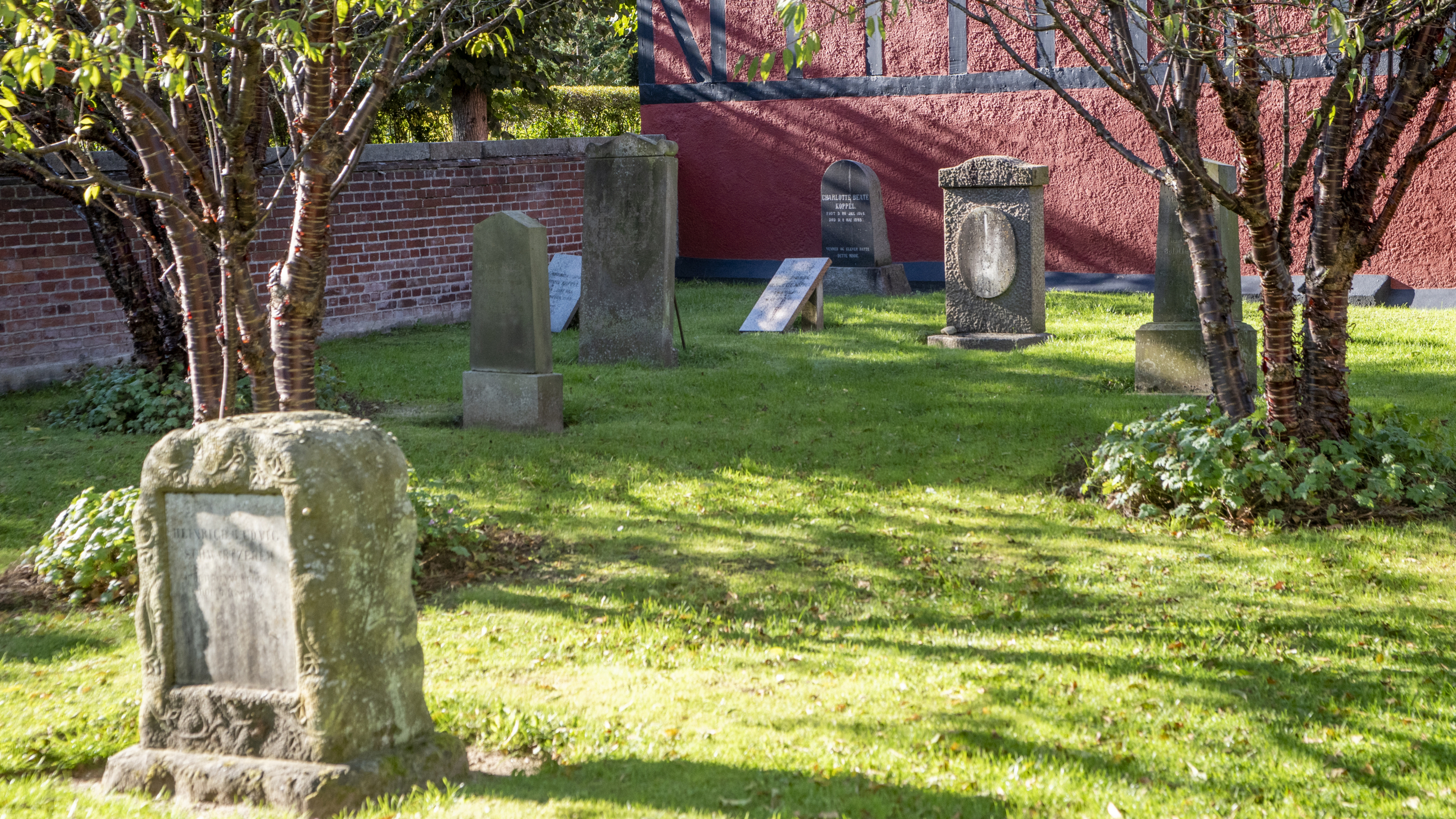
The cemetery in Odense
June 19 – July 29, 2025
Exhibition period
The traveling exhibition 'The House of Eternity' held an opening reception on June 19, 2025 from 16-18 p.m. The exhibition was located in the parking lot at Odense Assistenskirkegård in Odense on the corner of Kirkegårds Allé and Vandværksvej.
200th anniversary of the cemetery in Odense
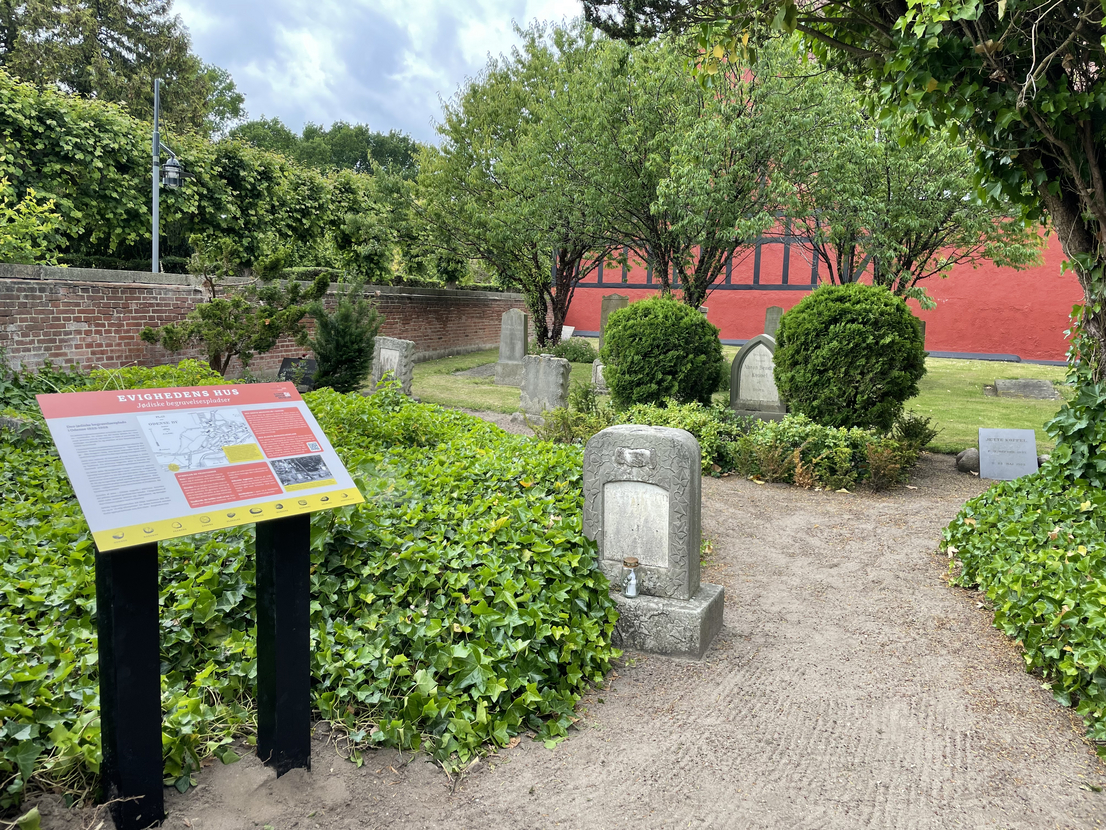
In 2025, it was the 200th anniversary of the establishment of the Jewish cemetery. This was marked with the opening of the pop-up exhibition “The House of Eternity” and a new information sign at the cemetery as part of the Danish Jewish Museum's communication of Jewish life in Denmark.
How many Danish kroner did the cemetery in Odense cost?
The Jewish cemetery in Odense was established in 1825. The small congregation in Odense had now grown large enough to raise the necessary funds for its establishment. On 29 January 1825, permission was granted to establish a cemetery, and that same spring the congregation purchased a piece of land outside the city’s Vesterport, close to the newly established Assistens Cemetery. The land belonged to a private individual named Jens Rasmussen and cost 170 rigsbankdaler, a very large sum for a plot of land where, according to calculations, there was only room for “60 bodies”.
Regulations for the burial ground were drawn up, which also had to be approved by the authorities. This happened on 30 April 1825, after which it was finally approved by the Royal Danish Chancellery on 9 May 1825. The first burials – unfortunately also a child’s burial – took place that same year.
Jewish life in Odense
The history of Jewish life in Odense dates back to the late 1600th century. The first Jews were granted citizenship in Odense in the 1690s, but actual settlement did not take place until the 1790s. At the beginning of the 1800th century, there were just over 100 Jews in the city. In 1805, the city's Jews were allowed to set up a synagogue in an apartment at Overgade 28 and a proper Jewish congregation was established. Gradually, the desire to also have their own burial ground in the city grew – previously, people had been referred to Fredericia, Copenhagen and Nakskov. This became a reality in 1825.
Among the prominent Jews in Odense is AD Cohen (1794-1863), who applied for the position of rabbi in Copenhagen, but became catechist for Funen. He was a theologian, author and bookseller, and wrote, among other things, an important book on Jewish life in Denmark in 1837. Another example is Harry Dessau (1862-1915), who was a successful manufacturer and business leader and the last leader of the congregation in Odense. He died in 1915 in the city, but was buried at Vestre Mosaiske Begravelsesplads in Copenhagen.
The number of Jews in Odense peaked in the period 1810s-1830s, when there were just over 100 Jews in Odense in 1817, falling to 21 Jewish families with a total of 82 people in 1834, after which the Jewish community gradually decreased. In the early 1900th century, the Jewish minority gathered in Copenhagen, and the congregation in Odense ceased to exist. The last burials among the original congregation took place in the 1920s, with the last one in 1928.
But in the 1960s, three more burials took place. Hans Jakob Wolf and the couple Paula and Albert Simon were among the Jews who fled Germany in the 1930s and settled in Denmark. Like other Jews, they had to flee to Sweden in 1943, but after the occupation they returned to Odense, where they also found their final resting place. Hans Jakob Wolf died in 1964, Paula Simon in 1961 and Albert Simon in 1968. He is the last to be buried in the Jewish cemetery in Odense.
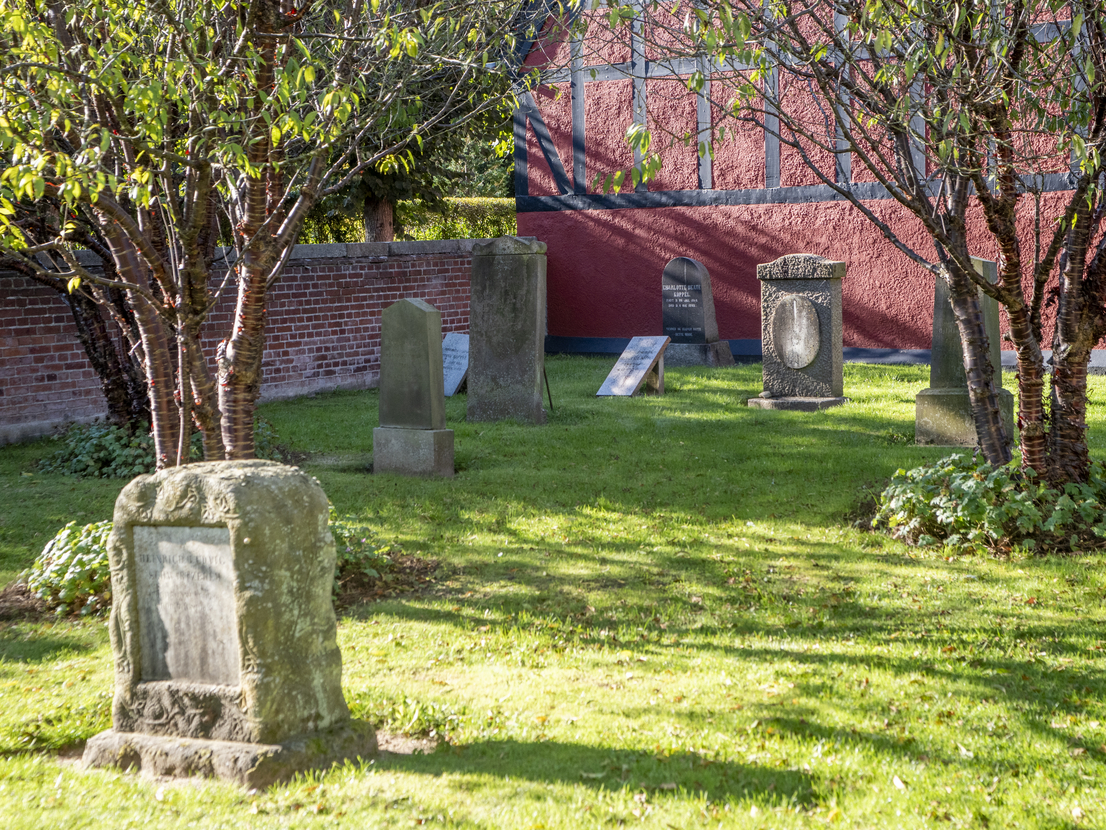
Since 1825, 88 burials have taken place, but in 2025, only 33 visible stones remain.
Do you want to know more?
In the video above you can hear archivist Jens Åge S. Pedersen from Historiens Hus – Odense City Archives talk about the cemetery. He has also written a chapter in the Odense book 2025 - “The House of Eternity. The Jewish cemetery will be 200 years old”, pp. 133-153.
You can also listen to a new podcast episode in 'Something to Talk About' about the cemetery in Odense.
About the project
The project is supported by pool funds from the Danish Agency for Palaces and Culture and is carried out in collaboration between the Danish Jewish Museum and local actors in the ten cities with burial grounds.
The project runs from 2025 - 2028